
IVF Process Guide 2026: Achieve Successful Fertility Care
- Feb 12
- 8 min read

Facing fertility challenges in your late thirties or beyond can feel like navigating a maze filled with uncertainty. For many women worldwide considering IVF with donor eggs, understanding each step of the treatment process brings much-needed clarity and control. By planning a detailed timeline and embracing personalized IVF strategies, you empower yourself to make informed decisions, track milestones, and confidently prepare for your unique path toward parenthood.
Table of Contents
Quick Summary
Key Insight | Explanation |
1. Create a personalized IVF timeline | A strategic timeline helps manage stress and prepare for IVF stages, adapting to individual needs and medical recommendations. |
2. Complete essential medical screenings | Thorough evaluations identify health challenges and inform tailored treatment strategies, enhancing the likelihood of IVF success. |
3. Choose the right egg source | The selection of egg source impacts IVF outcomes; options include using own eggs or donor eggs based on individual fertility profiles. |
4. Monitor during ovarian stimulation | Close monitoring of hormone responses and follicle development is vital for adjusting treatments and maximizing pregnancy potential. |
5. Confirm embryo quality before transfer | Assessing embryo development stages ensures only the best candidates are selected for transfer, directly impacting success rates. |
Step 1: Plan your personalized IVF timeline
Mapping out your personalized IVF journey requires strategic planning and understanding of the complex fertility treatment process. By creating a detailed timeline, you can reduce stress and feel more prepared for each stage of your reproductive care.
The IVF timeline typically spans 3-8 weeks, with multiple critical phases that require careful coordination. To help you visualize this journey, the IVF timeline calculator provides an excellent resource for tracking your specific protocol and expected milestones.
Key components of your personalized IVF timeline include:
Initial consultation and medical screening
Ovarian stimulation protocol selection
Hormone medication management
Monitoring appointments and ultrasound tracking
Egg retrieval procedure
Embryo fertilization and development
Embryo transfer
Pregnancy testing and confirmation
Each step requires precise timing and coordination with your fertility specialist. Factors like your age, medical history, and specific fertility challenges will influence your unique protocol, so working closely with your medical team is essential.
Your personalized IVF timeline is a dynamic roadmap that adapts to your individual reproductive health needs.
Pro tip: Create a dedicated digital or physical calendar to track all your IVF appointments, medication schedules, and important dates to reduce stress and improve treatment coordination.
Step 2: Complete essential medical screenings
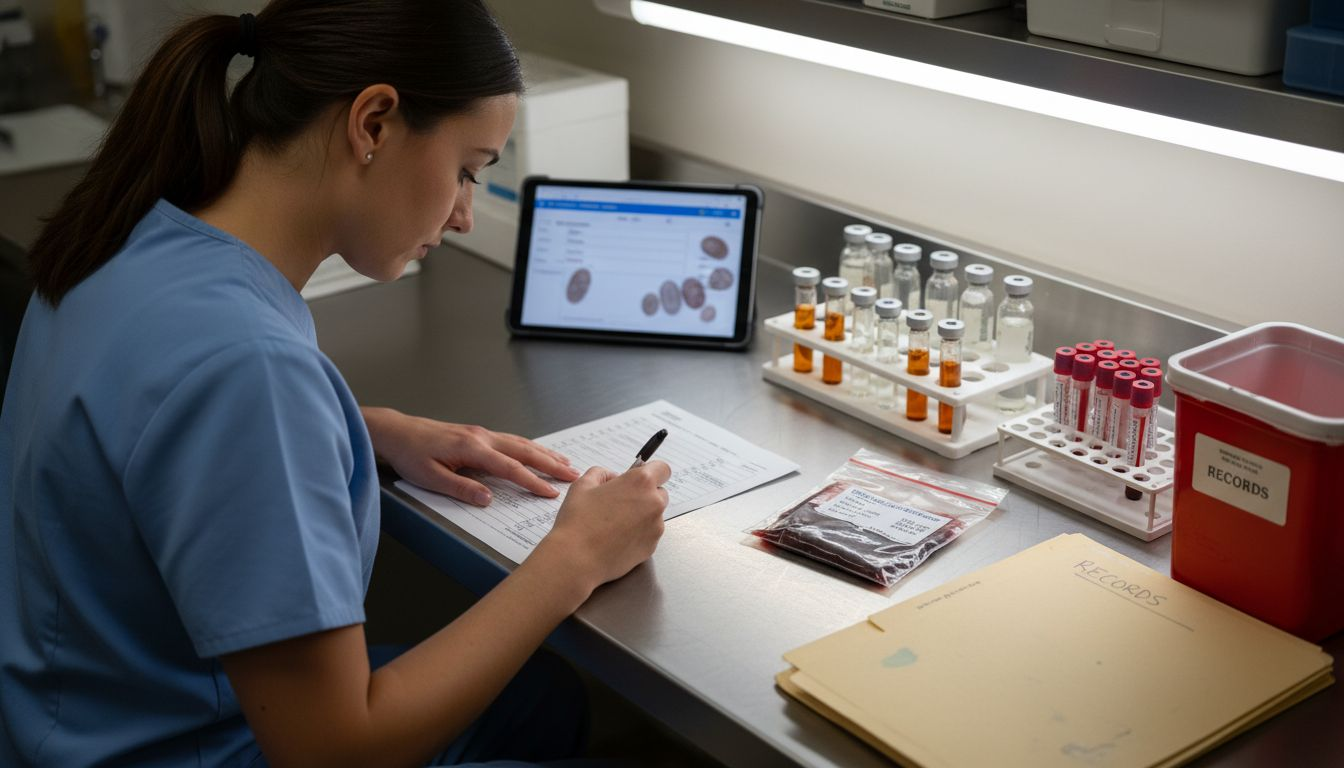
Preparing for IVF requires a comprehensive medical evaluation to ensure your reproductive health and optimize treatment success. Standardized pre-IVF screening protocols will help identify potential challenges and create a personalized treatment strategy tailored to your unique health profile.
Your medical screening will typically include several critical assessments:
Blood type and Rh factor verification
Immunity status for infectious diseases
Genetic carrier screening
Comprehensive infectious disease testing
Ovarian reserve evaluation
Hormonal profile assessment
Chronic condition management
Specifically, medical professionals will conduct detailed tests to examine your overall reproductive health. Comprehensive patient evaluation involves checking for infections like hepatitis B and C, HIV, and syphilis, while also performing genetic carrier screenings to assess potential hereditary disease risks.
Early and thorough medical screening can significantly improve your chances of a successful IVF outcome.
Important screenings will assess your hormonal health and genetic predispositions, helping your fertility specialist develop the most effective treatment approach. Key hormonal tests like Anti-Mullerian Hormone will help predict your potential response to ovarian stimulation medications.
Pro tip: Request a complete copy of your medical screening results and discuss each finding in detail with your fertility specialist to fully understand your reproductive health landscape.
Step 3: Choose the ideal egg source and protocols
Selecting the most appropriate egg source and stimulation protocol is a crucial decision that can significantly impact your IVF success. Personalized reproductive guidance helps determine the most effective approach based on your unique fertility profile.
Your primary egg source options include:
Using your own eggs (autologous)
Using donor eggs
Combination strategies
Factors influencing your egg source selection involve:
Your age
Ovarian reserve
Previous fertility treatment history
Genetic considerations
Overall reproductive health
For women over 35 or with diminished ovarian reserve, donor egg considerations become increasingly important. These specialized protocols offer tailored approaches to maximize your reproductive potential.
Choosing the right egg source and stimulation protocol is not just a medical decision, but a deeply personal journey toward parenthood.
Stimulation protocols vary based on individual needs, with two primary approaches:
Gonadotropin-Releasing Hormone (GnRH) Antagonist Protocol
GnRH Agonist Protocol
Each protocol has specific advantages depending on your hormonal profile, age, and previous fertility challenges. Your reproductive specialist will recommend the most suitable approach after comprehensive medical evaluation.
Here’s a quick comparison of IVF stimulation protocols and their typical applications:
Protocol Type | Best Candidate Profile | Main Advantage |
GnRH Antagonist | Women with normal hormonal levels | Shorter treatment, lower risk of complications |
GnRH Agonist | Women with hormonal imbalances or previous IVF cycles | Improved ovarian response, flexible timing |
This provides clarity on selecting stimulation protocols based on your unique needs.
Pro tip: Request a detailed consultation discussing multiple protocol options, and don’t hesitate to ask about success rates specific to your individual reproductive health profile.
Step 4: Begin ovarian stimulation and monitoring
Now that you have selected your fertility protocol, it’s time to start ovarian stimulation, a critical phase in your IVF journey. Ovarian stimulation protocols involve carefully administered hormone injections designed to encourage multiple follicle development and maximize your pregnancy potential.
Your stimulation process will typically involve:
Daily hormone injections
Specialized medication combinations
Frequent monitoring appointments
Ultrasound tracking
Blood hormone level assessments
The primary medications used during this phase include:
Follicle-stimulating hormone (FSH)
Human menopausal gonadotropins
GnRH antagonists or agonists
Your body’s unique response to stimulation determines the precision of your treatment approach.
Medical professionals will carefully adjust your medication dosages based on your individual hormonal response and follicular development. Regular vaginal ultrasounds and blood tests help track follicle growth and prevent potential complications like ovarian hyperstimulation syndrome.
Pro tip: Maintain a detailed medication log and track your physical responses, creating a comprehensive record to discuss with your reproductive specialist during monitoring appointments.
Step 5: Proceed with egg retrieval and fertilization
The egg retrieval procedure marks a pivotal moment in your IVF journey, transforming months of preparation into tangible reproductive potential. Follicular aspiration techniques represent a sophisticated outpatient process designed to optimize your fertility treatment.
Key components of the egg retrieval process include:
Minor surgical procedure under sedation
Transvaginal ultrasound guidance
Precise needle aspiration of mature follicles
Immediate laboratory processing of retrieved eggs
Fertilization methods offer multiple approaches:
Standard in-vitro fertilization
Intracytoplasmic sperm injection (ICSI)
Specialized fertilization techniques based on individual challenges
Your carefully retrieved eggs represent extraordinary potential for creating life.
During the laboratory phase, embryologists will carefully evaluate and fertilize your eggs, creating the best possible conditions for potential embryo development. Sperm selection and injection require exceptional precision and expertise to maximize fertilization success.
Pro tip: Request a detailed embryology report after egg retrieval, which provides comprehensive insights into the quantity, quality, and fertilization potential of your retrieved eggs.
Step 6: Confirm embryo development and schedule transfer
After fertilization, your embryos enter a critical phase of careful laboratory monitoring to assess their developmental potential. Embryo culture and evaluation represents a sophisticated process designed to select the most viable candidates for transfer.
Key stages of embryo development include:
Day 1-2: Initial cell division assessment
Day 3: Cleavage stage evaluation
Day 5: Blastocyst stage development
Your embryology team will track critical markers:
Cell symmetry
Cellular fragmentation rates
Overall growth progression
Morphological characteristics
Each embryo represents a unique potential for life, carefully nurtured through precise scientific techniques.
Typically, embryo transfer occurs between day 3 and day 5 post-fertilization, depending on individual embryo quality and development. Ultrasound-guided transfer techniques ensure precise placement within the uterine cavity to optimize implantation potential.
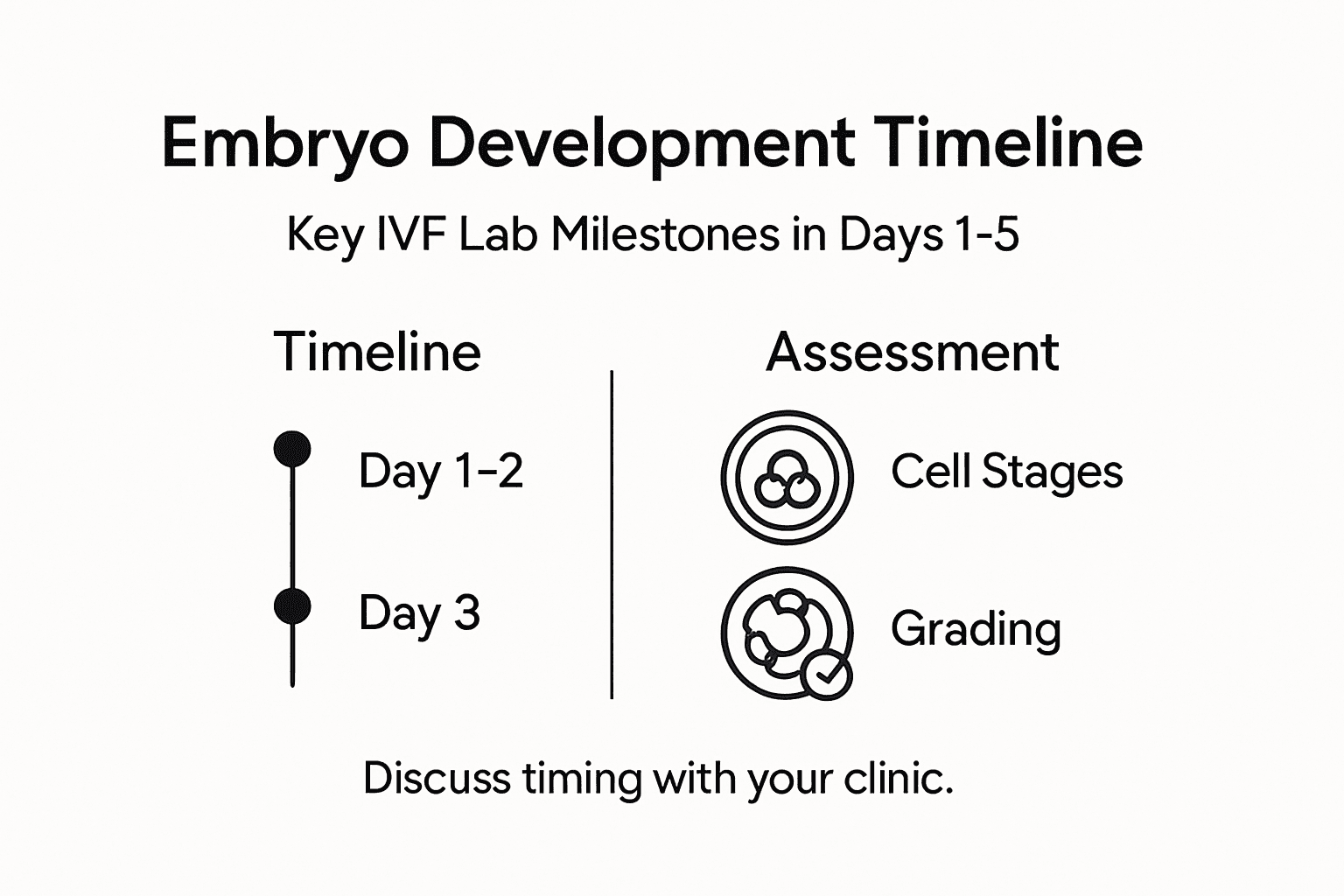
Below is a reference table summarizing the stages of embryo development and what is assessed at each step:
Stage | Timeline (Post-Fertilization) | Key Assessment |
Early Cell Division | Day 1-2 | Cell number and symmetry |
Cleavage Stage | Day 3 | Fragmentation and growth rate |
Blastocyst Stage | Day 5 | Morphological quality for transfer |
This offers an overview of embryo development milestones during IVF lab monitoring.
Pro tip: Request a comprehensive embryo grading report, which provides detailed insights into the developmental quality and potential success of each embryo during your transfer.
Take Control of Your IVF Journey with Expert Care at Rejuvenating Fertility Center
Navigating the IVF process involves many complex steps such as personalized timelines, tailored ovarian stimulation protocols, and careful embryo development monitoring. If you are facing challenges like diminished ovarian reserve or considering donor egg options, you are not alone. Understanding terms like GnRH Antagonist Protocol or blastocyst stage development can feel overwhelming. At Rejuvenating Fertility Center, we specialize in delivering innovative, customized fertility solutions designed to meet your unique reproductive health needs with advanced therapies and compassionate support.
Explore our comprehensive services including IVF with own or donor eggs, ovarian rejuvenation, and regenerative therapies by visiting Rejuvenating Fertility Center. Ready to start your personalized fertility care plan? Discover how we can help you optimize your IVF timeline and improve success rates by booking a consultation today at https://rejuvenatingfertility.com. Take the next step toward your family dreams with confidence and expert guidance.
Frequently Asked Questions
What is the typical timeline for the IVF process?
The IVF process typically spans 3-8 weeks, encompassing several critical phases. To prepare effectively, create a personalized timeline to manage each step of your reproductive care.
What essential medical screenings should I complete before starting IVF?
Before beginning IVF, you should undergo comprehensive medical screenings including blood type verification, genetic carrier screening, and ovarian reserve evaluation. Schedule these screenings early to optimize your treatment strategy and address any potential challenges.
How do I choose the right egg source for my IVF treatment?
Choosing an egg source involves deciding between using your own eggs, donor eggs, or a combination of both. Evaluate your age, ovarian reserve, and reproductive health with your fertility specialist to determine the best option for your unique situation.
What are the key steps in ovarian stimulation during IVF?
The key steps in ovarian stimulation include daily hormone injections, frequent monitoring appointments, and ultrasound tracking of follicle development. Stay diligent with your medication schedule and keep a log of any side effects to discuss with your medical team.
How is the egg retrieval process performed in IVF?
Egg retrieval is a minor surgical procedure conducted under sedation where mature follicles are aspirated using transvaginal ultrasound guidance. Prepare for it by following your medical team’s instructions and arranging for someone to accompany you home afterward.
How can I monitor embryo development after fertilization?
Monitoring embryo development involves tracking their progress through various stages, including initial cell division and blastocyst stage. Request regular updates from your embryologist to stay informed about the quality and viability of your embryos before transfer.
Recommended
Comments